


Dentistry
Bruxism
Clenching or grinding the teeth while asleep or awake may cause dental wear, muscle tension and jaw discomfort.
What is bruxism?
The stomatognatic system is a morphofunctional unit formed by a series of structures that form part of the skull, which participates in the performance of vital functions such as chewing, gluing, phonation and breathing. There are habits that manifest in it and produce morphological changes such as migrations and tooth wear, among these bruxism, which impact significantly on the quality of life of people.
Bruxism is an act in which the person squeezes or grinds the teeth, day or night, with varying degrees of intensity and persistence in time, usually unconscious and outside of functional movements; it usually appears at early ages (adolescence) and affects men and women equally. One in three people suffer from bruxism.
Causes of bruxism. .
Although there are different theories about the possible causes of their appearance, the real origin of this health problem is unknown at the moment. A large number of experts agree that stress and sleep disorders may be two of the main causes of this disorder; however, they also consider other factors that may intervene in the onset of bruxism such as: genes, poor diet (alcohol or caffeine consumption), improper alignment of the teeth, smoking, presence of respiratory disorders during sleep, certain medications, and certain medications to treat depression, seizures, seizures, seizures, seizures, and anxiety, and other disorders, among others.
Symptoms and signs
- Dental wear
- Dental hypersensitivity
- Unforeseen fractures of teeth and shutters_
- Dental mobility
- Pulpary disorders:
- Non-carious injuries at the level of the neck of the piece
- Muscle hypertonia)
- Unilateral or bilateral hypertrophy
- Joint noises at the level of the temporomandibular joint (TMJ)
- Headache
- Myalgia)
- Myo-spasm_
- Over time, trigger points appear
How does it manifest?
Bruxism results in sustained muscle contraction for long periods of time, reducing oxygenation within muscle tissues with consequent decrease in blood flow and as a result carbon dioxide levels and cell waste by-products increase within muscle tissue creating symptoms of fatigue, pain and spasms in the mandibular area.
Work-related musculoskeletal disorders (TMD) refer to any damage to the joints, tendons, muscles and nerves. The term "work-related musculoskeletal disorders" refers is used to describe the term "work-related to describe the work-related disorders, and the work-related disorders, and the work-related disorders of the work-related disorders, and the work-related disorders, and the work-related disorders, and the work-related disorders, and the work-related dis. They occur or are aggravated by improper posture over long periods, as well as by repetitive activities such as lifting, pushing or pulling objects. The following the. The more repetitive the task, the faster and more frequent the muscle contractions, thus demanding a greater effort to the muscle, increasing fatigue. Neutral posture is the most recommended for the human body, reducing stress and providing greater control and strength.
Bad postures affect the cervical nerves as well as the muscles of the shoulders, systems that are intimately related to the TMJ. This tension must be removed in some way, which is often at night when the muscle system relaxes, and which can be expressed by toothing or gritting.
Treatment
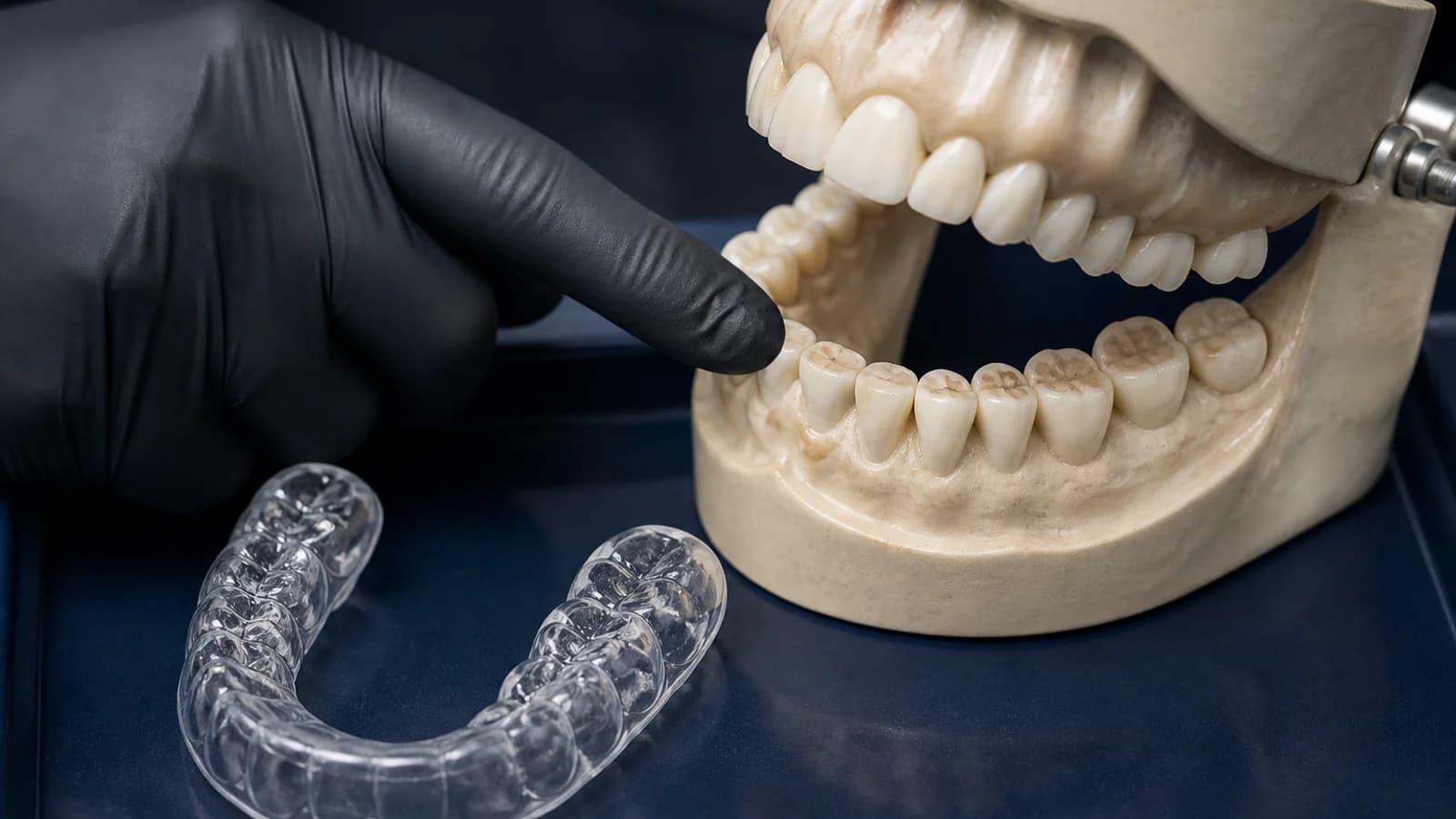
Bruxism can be treated with a combination of measures, where several health specialists intervene. Mainly the dentist for the design and manufacture of a myorrelaxant splint; THE physiotherapist for the application of relaxing techniques such as massage and apparatusology for des AWPurar; The doctor with intra- or oral medication and the maxillofacial surgeon for the application of botulinum toxin in severe cases may also intervene. It is also important to consider lifestyle changes such as physical activity.
Dr. Sarai Guillén Gómez
Author: Dr. Sarai Guillén Gómez
Personalized care
Do you need professional guidance?
Our team can help you find the right specialty and coordinate your appointment.
Schedule via WhatsApp →