


Physical therapy
Muscle contracture
A contracture is persistent, painful muscle tightening that may follow overload, posture, stress or insufficient recovery.
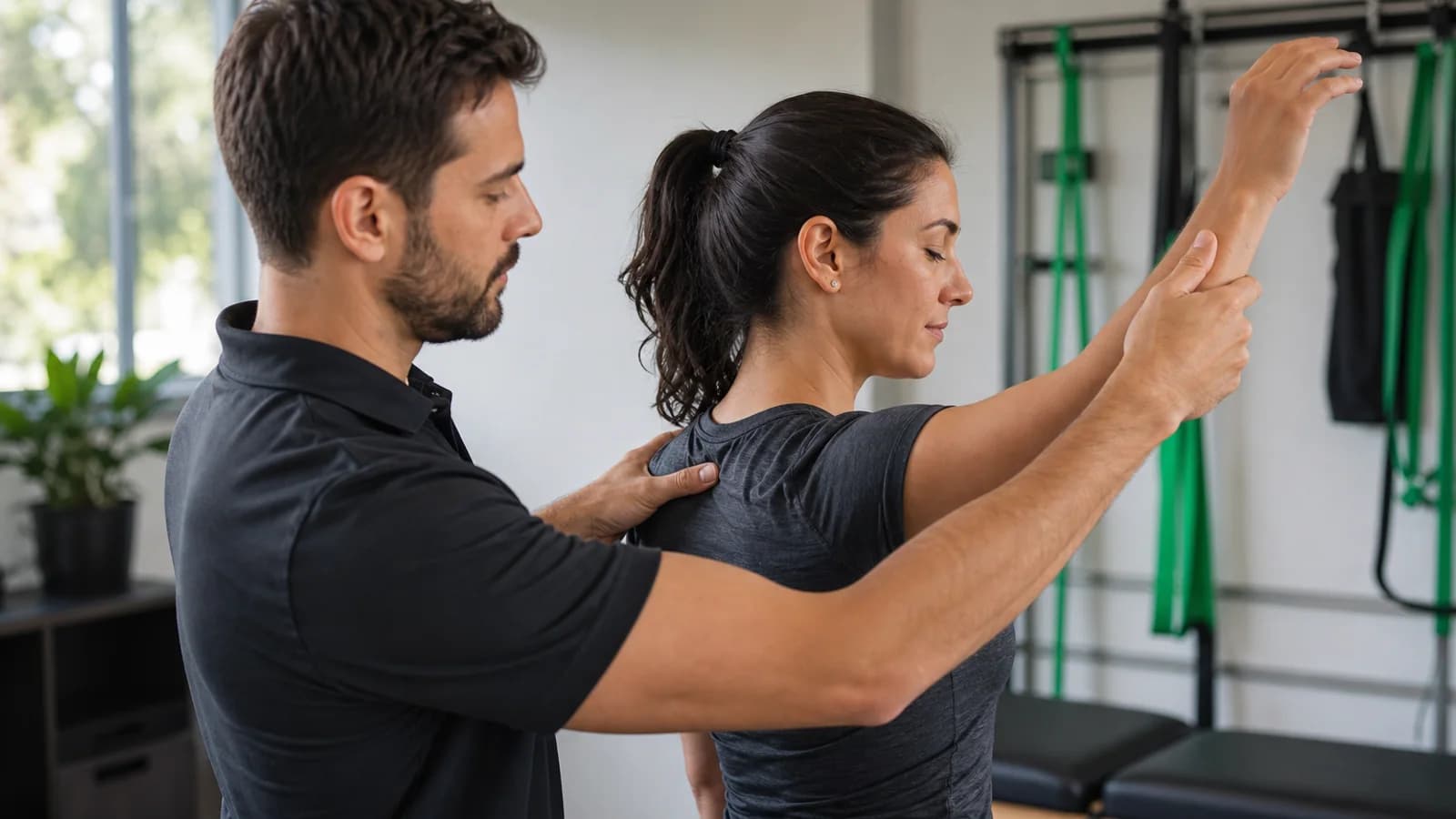
What is a Muscle Weight?
A muscle strength, is the. continued involuntary contraction of a muscle and its fibers, which cause pain and a disruption of its usual functioning.
This prevents blood from reaching muscle cells and accumulating toxins; which causes nerve endings in the muscle to send signals to the brain, causing pain.
Muscle strength is a common injury not only among sportsmen, but also among people who are elderly, stressed or who take bad postures.
Muscle strength is manifested as a bulging of the area, which involves pain and alteration of the normal functioning of the muscle. It usually appears when the muscle performs inappropriate activity in intensity or function.
Muscle contraction occurs because a muscle increases its tension, therefore there is a shortening of its fibers, or simply by the increase of muscle tone, which has passed from a state of rest to a state of work. When it is persistent, painful and involuntary, the term "Contura" is applied.
When does one appear - What's the matter? contracture?
At the time we are exercising or moving: they occur because there is an accumulation of metabolites, which cause pain and inflammation, as there is not enough blood irrigation to degrade the area.
After exercise or movement: due to excessive fatigue of the fibers, which at the end of exercise are diminished their ability to relax.
It is a defense mechanism in which the muscle contracts to limit movements thus avoiding worsening of an underlying problem.
The contraction causes pain that in turn causes contraction, and the muscle loses ability to relax. This vicious circle is what we will have to break to bring back to the normality of the muscle.
Types
- During an effort: When performing any physical exercise the body metabolizes active substances to produce movement. This process results in these active substances being used as waste or inactive substances (metabolites). When the effort is high, whether due to hard exercise or lack of training, the body is unable to remove these metabolites through the bloodstream, and they accumulate and generate pain and inflammation.
- Post-effort: In this case, the injury appears because of the muscle's inability to return to its resting state. Sometimes, after intense exercise in which the muscle has been subjected to a heavy workload, it is unable to resume its natural state of relaxation from the accumulated fatigue. The muscle is unable to the muscle is unable to relaxation. The muscle is unable to relaxation of the muscle is not to relaxation. The muscle is not to the muscle is not to relaxation. The muscle is not to relaxation is not to the muscle is not to relaxation. It.
- Sunflowers: After a severe injury (a break in fibers, a fracture, a sprain, a severe trauma), the muscles adjacent to the injured area tend to contract as a protective mechanism. This contraction with protective purposes, causes that contiguous muscles are retained once the main lesion is healed.
Types according to how it is produced
- Miostatic: It occurs with an unusual movement that produces momentary pain, but does not cause injury. It recovers its normal state with a series of gentle stretches.
- Adherence: It occurs because of lack of movement. It can serve as an indication of the need for exercise.
- Stickiness of scar tissue:_ Due to lack of movement, a scar is formed that limits movement.
- Unreversible contractura: It occurs when the soft and conjunctive tissues of the muscles are replaced by bone or fibrotic, causing loss of mobility.
- Pseudomioestatic: It is caused by the central nervous system, and leaves the muscle in constant contraction.
- The following: Postural: The following: These lesions are slowly and progressively caused by bad postures. They don't usually give much pain, except when they are associated with other nearby muscles. Here would be the typical knots on the neck.
- Contracturas by hypotonia: Also called muscle spasms. They occur when the muscle is weak and we ask for a stronger contraction, a strongness occurs to prevent the breakage of fibers. These are usually produced with sports practice.
- Dehydration contractures: There may be episodes of torticoli due to muscle dehydration and accumulation of toxic substances that cause great cervical stiffness and significant pain in movement, as well as headache or dizziness.
- Postural Oclusal Syndrome: It is a clinical picture characterized by a set of symptoms such as muscle neck and back braces, as well as headaches throughout the day. These symptoms are directly related to alterations in the position of teeth, the tone of chewing muscles and the change of position of the temporomandibular joint. A key indication is bruxism (squeezing and/or clenching of teeth, usually at sleep).
What causes a muscle contracture? What?
- Sedentarism: People who do not perform physical activities in a regular way are more likely to suffer a weariness when they perform it, as the muscle is not prepared enough to carry out an unusual effort.
- Static posture: BAR_ Being in the same posture for a long time can cause a lot of fighting. For example, if you sit in the office for a long time. It is very common in people who work long in front of a computer. These people may refer to cervical and back pain.
- Advanced age: This is because the aging process directly affects the muscles, and causes them to lose elasticity and therefore are more likely to suffer a weariness when making an unusual effort.
- Stress: It can cause involuntary wear because of constant tension. The bruxism is again present, which, when the person with his teeth is pressed for long periods, produces the bruxism of a series of muscles.
- Sport: The sports in which the most common are the "Conturas" are those of impact (athletics, basketball), ballistic action (hammer launch, javelin) and inferior train (cycling, skating, football).
- Dehydration: Lack of water as well as other components such as magnesium, potassium, glucose, or sodium are considered to increase the chances of suffering a contracture or cramp, as they are elements that muscle cells need for their proper functioning.
- Poorly cured muscle injury: Previous contractura that did not heal completely and got the muscle to work again very soon.
- Traumatism: It is a muscle strength caused by trauma or a blow?
- Infectious disease: e.g. peritonitis meningitis, tetanus.
Most affected areas
- Espalda: back (lumbage or back pain) and cervical (cervicalgia or tortícolis)
- Legs: knees, twins and buttocks.
- Arms: biceps, triceps, forearms and fingers (for new technologies)
How can I prevent it?
The first step in preventing a muscle posture is the awareness of good postures; 90% of the postures are due to bad habits maintained over time.
People who sit or stand for a long time; between 8 and more hours, they are advised to stretch every hour to prevent the armed forces, especially in the areas of the body they use most.
But if it has already generated pain, it is because all the mechanisms of prevention of the body have failed and the warning system is activated
- Make changes in posture every once in a while.
- Stretch every two hours for two or three minutes.
- Drink enough water and regularly throughout the day.
- To follow a balanced diet.
- Avoid stress and sleep for the necessary sleep hours.
Muscle contracture treatment
- Pharmacology: ( Mior relaxants and anti-inflammatory drugs). If the pain is greater, chronic or accompanied by inflammation in the area; pharmacological measures may be used but always on medical prescription.
- Local heat: is usually very useful when getting a relaxing and analgesic effect. The following is the The following moderated dry heat in short times (about 15 minutes) throughout the day, accompanied by slow, smooth and controlled stretching.
- Massages: Massages must be done by a physiotherapist, but the Society will get worse. The massage will increase blood flow, which improves tissue recovery and metabolite cleansing, and also helps to relax the muscle, reducing stress and thus pain. The massage will also help to reduce the blood flow. The muscle massages. The muscle massages. The muscle massages. The muscle massages. The muscle massages are also increase the muscle massages.
- Hydrotherapy: They are stretches or water exercises. Stretching and light activity in water are recommended after the acute phase of contraction. In a single bath or mini hot pools are ideal for relaxing?
- Rest: It is important not to saturate the muscle.
- Localized electrotherapy: With analgesic TENS currents in the muscle group, or microwave.
- Infrared: Surface heat.
- Dry puncture: Useful to release tensions by acting directly on trigger points.
- Neuromuscular hardware (kinesiotaping): These elastic tapes are applied in the affected area in such a way that they allow movement and therefore a muscle improvement in a biomechanical way. These bandages hold muscles; so they offer both muscle and joint stability; and help improve the contraction of the weakened muscle.
- Food: The food It is recommended to increase the consumption of foods with more potassium such as bananas, potatoes, soy flour, bran or apricots. .
The best treatment is based on prevention.
If you found this article interesting share it with your friends, so they can avoid a muscle strength?
Dr. María Gutiérrez Coto. Dr. Mónica Salas Quirós Physiotherapists
Author: Torre Médica Santa Inés
Personalized care
Do you need professional guidance?
Our team can help you find the right specialty and coordinate your appointment.
Schedule via WhatsApp →