


Periodontics
Gum disease
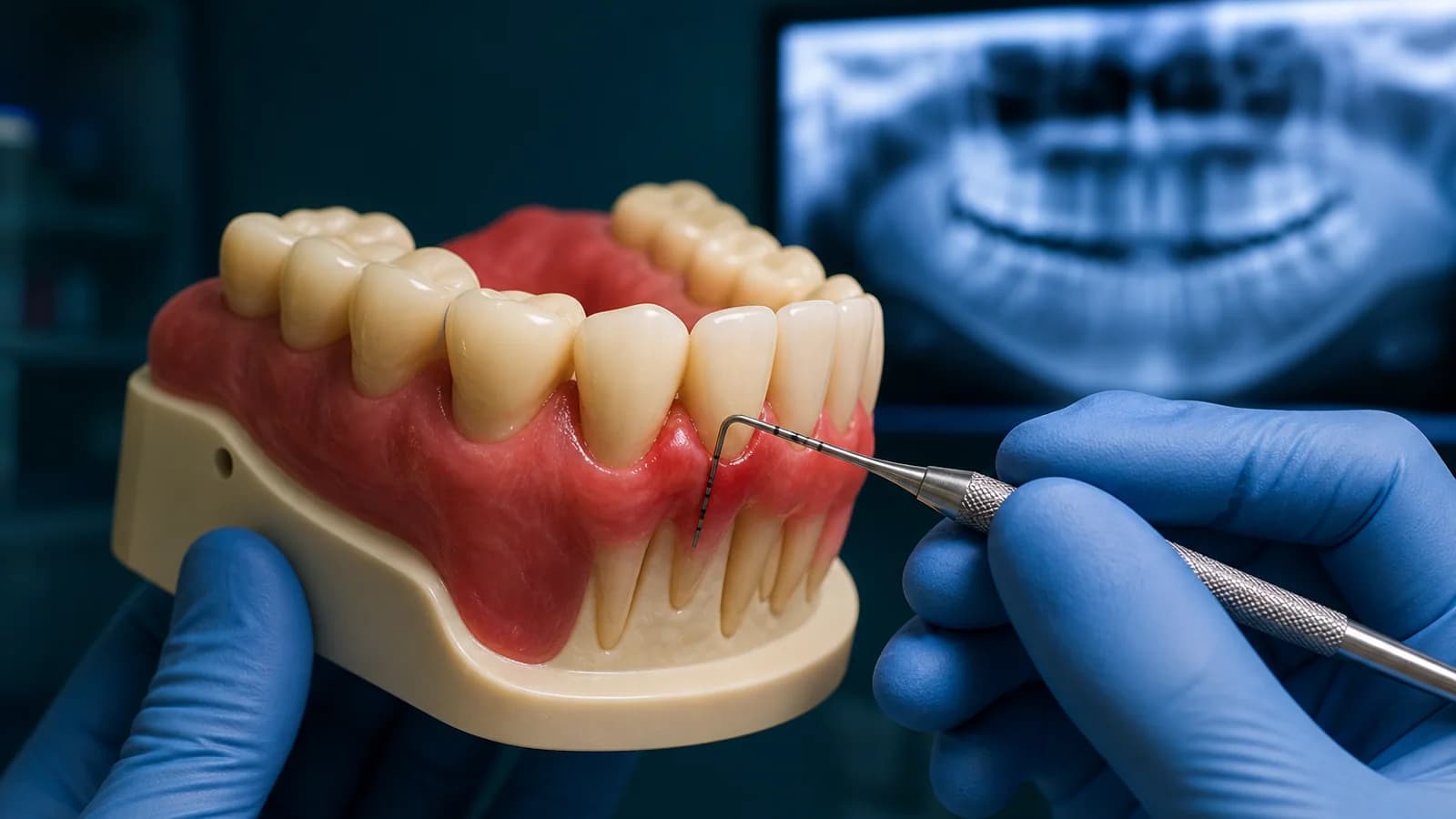
Bleeding and inflammation may be early signs of periodontal disease that should be assessed before tooth-supporting tissues are damaged.
What is gum disease?
Gum disease is called periodontal disease o Periodontitis. It starts with the formation of the biofilm or bacterial plaque. It starts with the formation of the biofilms. The bacterial plaque. The bacterial.
The biofilm is a thin biofilm formed by accumulation of microorganisms that is located in teeth and gums. It cannot be seen at the naked eye, but through the inklings of the dentist.
If dental biofilm is not removed early with the brush and thread, it will increase its thickness and ripening; forming a white putty in the teeth that is mineralized and transforms into a hard deposit called tartar or calculus. This tartar can no longer be eliminated at home, since dental instruments are required to separate it from the tooth.
With the maturation of biofilm, there is a release of acids, which are responsible for dental caries and periodontal disease.
Characteristics of healthy gum
- It is pale pink and firm in texture.
- He doesn't bleed when he brushes.
- It keeps a scorched shape around the teeth.
If changes in colour, volume or are observed in the study bleeding from brushing or tooth spinning, gum disease may be present.
How do I recognize gum disease?
- This involvement begins with gingivitis, which is inflammation of the gums, caused by accumulation of the dental biofilm.
- Bleeding gums when brushed and/or flossed.
- Bulk, red and bright gums.
- There may be bad breath and pain.
Cases.
Some of them Some factors that cause gum disease are defective and unadjusted dental restorations, poorly adapted prosthetics, mouth breathing, pregnancies and hormonal changes, poorly controlled diabetes. It is important to remember that there is a component of genetic susceptibility for periodontal disease.
If we let gingivitis advance, the disease progresses to Periodontitis; it is a localized or generalized infection that affects the tissues that sustain and surround the tooth. It is a progressive inflammatory condition that destroys the tooth support apparatus, including bone, so it can cause tooth loss.
Symptoms))
- Bleeding to brushing or spinning.
- Red and/or enlarged gums.
- Gums that retreat leaving tooth roots uncovered.
- Teeth that loosen or separate.
- Presence of pus.
- Bad breath.
- Changes in the position of teeth.
- Variations in the bite.
- increased airworthiness to the cold.
How to cure gum disease?
The periodontal disease is silent and slow-moving in most cases. Some people don't detect any of the changes. This disease can be avoided, following good oral hygiene, maintaining a healthy diet and visiting the. Dentologist periodically.
- Consult your dentist.
- Gum disease is controlled with regular dental cleaning.
- To comply with the oral hygiene measures indicated to you.
- Change your brush every 3 months.
- Brush his tongue. That's where many of the bacteria that cause bad breath live.
In the face of any of these symptoms, do not hesitate to consult your dentist.
Dr. Sarai Guillén Gómez. Dentistry
Author: Torre Médica Santa Inés
Personalized care
Do you need professional guidance?
Our team can help you find the right specialty and coordinate your appointment.
Schedule via WhatsApp →