


Periodontics
Professional dental cleaning
Professional cleaning removes deposits brushing cannot eliminate and helps detect changes in teeth and gums early.
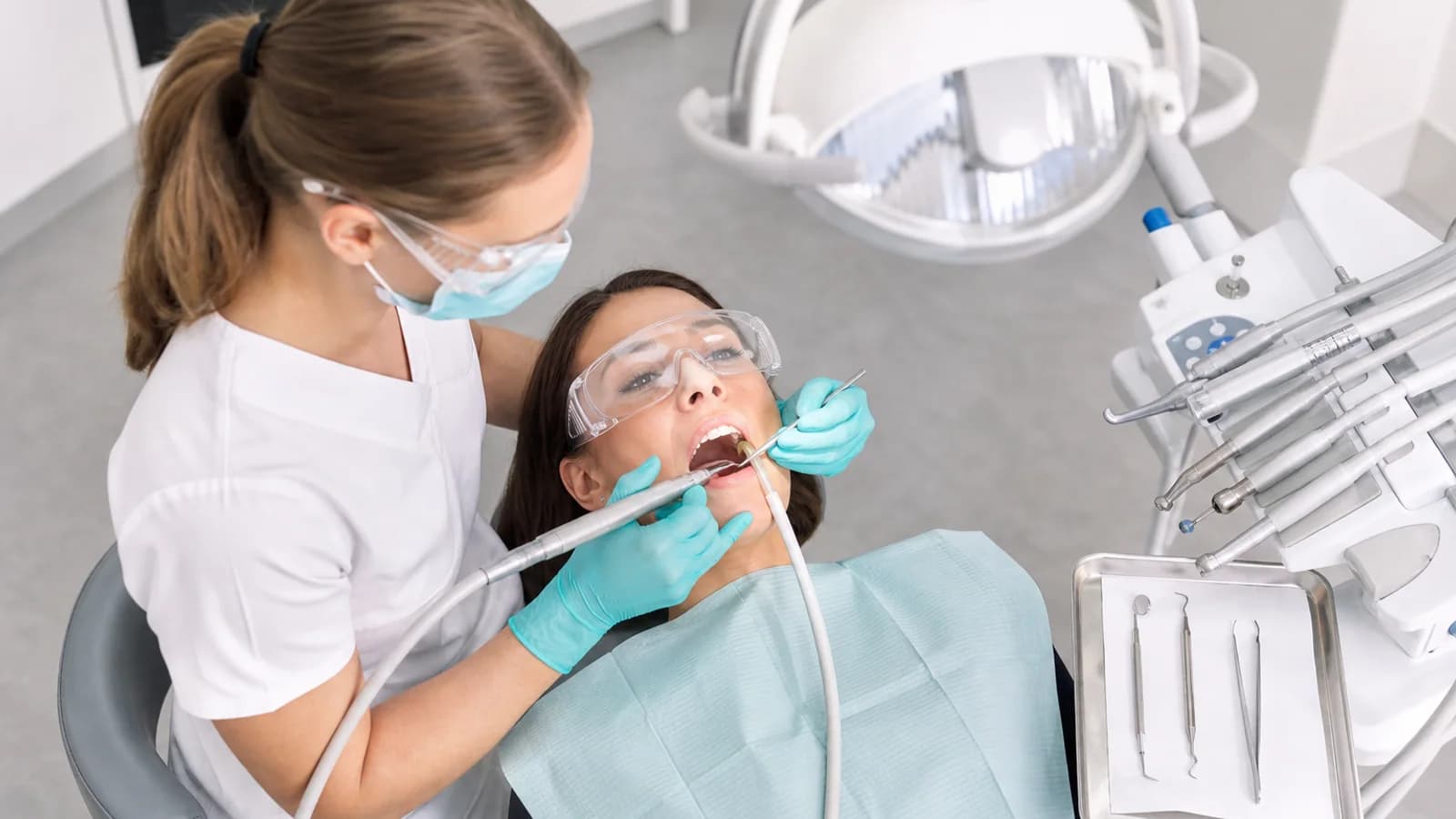
Why should dental cleaning be done?
Dental cleaning is one of the most important things you can do for your teeth and gums to maintain a good oral health.
Healthy teeth not only give a good look to your person and make him feel good, but also allow him to speak and eat properly. Good oral health is important for your well-being and overall health.
Daily preventive care. like brushing, flossing, and mouthwashing, they avoid subsequent problems, and are less painful and less expensive than treatments for an infection that has been allowed to progress.
How do I identify a healthy mouth?
- Good oral hygiene provides a mouth that looks and smells good?
- The teeth are clean and there's no food left.
- The gums are pink and do not hurt or bleed during brushing.
- Bad breath is not a constant problem.
Hygiene and dental cleaning at home and in the clinic
Whether you brush your teeth or use floss, there are always areas that are difficult to reach. Therefore, the dentist recommends periodic professional oral cleansing (in addition to each patient it can be every 6 months or one year).
With this simple act we can prevent and/or diagnose an anomaly in time and thus avoid extensive treatment or even lose a tooth.
What can we prevent with dental cleaning?
Gum disease
GINGIVITIS: Chronic inflammation of the gums. The following is the first step. The following: The. It is a bacterial infection caused by plaque, a sticky, colorless film filled with bacteria that sticks to the teeth (biofilm). As the plate builds up in the teeth, it hardens and becomes tartar It is not possible to remove with daily dental brushing; it can only be removed by professional oral cleaning.
JEPONTITIS: If bacteria are not removed and inflammation continues, gum tissue can be destroyed and the disease will move to more advanced states where it includes bone loss, and therefore loss of the tooth piece.
Caries
In the pits and fissures of the part of the tooth with which it is chewed also accumulates bacterial plaque and tartar, which if not removed in time bacteria demineralize the enamel and caries are produced.
Halitosis
It has oral causes such as poor oral hygiene, periodontal disease, a whitish layer on the surface of the tongue, foods stuck between the teeth, dirty dentures, oral carcinomas, or throat infections.
How is the daily dental cleaning done?
1. Brushed
The upper teeth should be brushed from top to bottom, brushing both gums and teeth, The brush should cover two teeth; brush six times each two teeth. It is carried in a single direction from right to left.
The lower teeth brush from the bottom up in the same way.
The occlusal faces (with which it is chewed) are brushed in circular form in an orderly form from right to left.
Soft tissues such as the inside of the cheeks and tongue should be brushed gently as well.
Brushing should be done 2 to 3 times a day.
2. Dental thread
Use about 45 cm of floss, leaving 3 or 5 cm to work. Gently follow the curves of your teeth. Make sure to clean under the gum, but avoid hitting the thread against it. Right to left the top teeth and then the bottom teeth.
Dental thread is used once a day. In the time that suits you most, it may be in the morning or before you go to bed.
3. Rinse?
There are different types of rinses, it can be with fluoride or without fluoride. It can be gestured to control a specific condition such as gingivitis. It is indicated for sensitivity, or for demineralization. The rinse that suits you best defines it along with your dentist as well as its frequency of use.
Professional dental cleaning
- Professional oral cleaning should be performed by the dentist. Dental surge. Dental surge. Dental or dentist.
Rough
Dental cleaning with ultrasonic, consists of removing plaque and tartar deposits mainly. A tool with vibrating movements such as ultrasound is used to remove tartar, hand-held elements can also be used to scrape any remaining parts.
Polished
It consists of polishing the teeth so that the surface is really smooth. While polishing removes stains and leaves teeth smooth and shiny, it is not just an aesthetic procedure. It also smoothes small imperfections and tooth rutings to prevent the plaque from sticking to them. Tools such as profijet with sodium bicarbonate and profil brushes are used to apply the prophylactic paste.
Fluorine
This can be applied in a couette or applied by means of a rinse. It serves to remineralize the enamel. It's two to three minutes left. To finish the procedure, you should wait 30 minutes before taking any food or drink.
Don't forget to continue with Promptness these tips to keep your mouth healthy and get a deep tooth cleaning.
Dr. Sarai Guillén Gómez. Odontologa
Author: Torre Médica Santa Inés
Personalized care
Do you need professional guidance?
Our team can help you find the right specialty and coordinate your appointment.
Schedule via WhatsApp →