


Orthodontics
Types of orthodontic treatment
Braces, aligners and removable appliances address different problems; the choice depends on diagnosis, not appearance alone.
The World Health Organization (WHO) states that malocclusion is the third oral health problem in prevalence; incorrect dental alignment predisposes for pre-trial sequelae.preprepreprepreprepreprepreprepreprepreprepreprepreprepreprepreprepreprepreprepreprepreprepreprepre.
The normal ratio between upper jaw and upper jaw has a pattern known as a "scissor". When biting, the upper teeth cover slightly the lower teeth, in the absence of. dental malpositions.
What is orthodontics?
It's called. orthodontics to science studying the position of teeth and their alveoli; and orthopaedic detho-facial study maxillae in their development.
Orthodontics is a specialty of dentistry that is responsible for the study, prevention, diagnosis and treatment of position anomalies, relationship and function of dentomaxillofacial structures.
The aim of the different types of orthodosis is to prevent diagnosing and correcting their possible alterations, keeping them within an optimal state of health and harmony, by using and controlling different types of forces.
Types of dental orthodontics Which is more suitable?
Types of Fixed Orthodontics
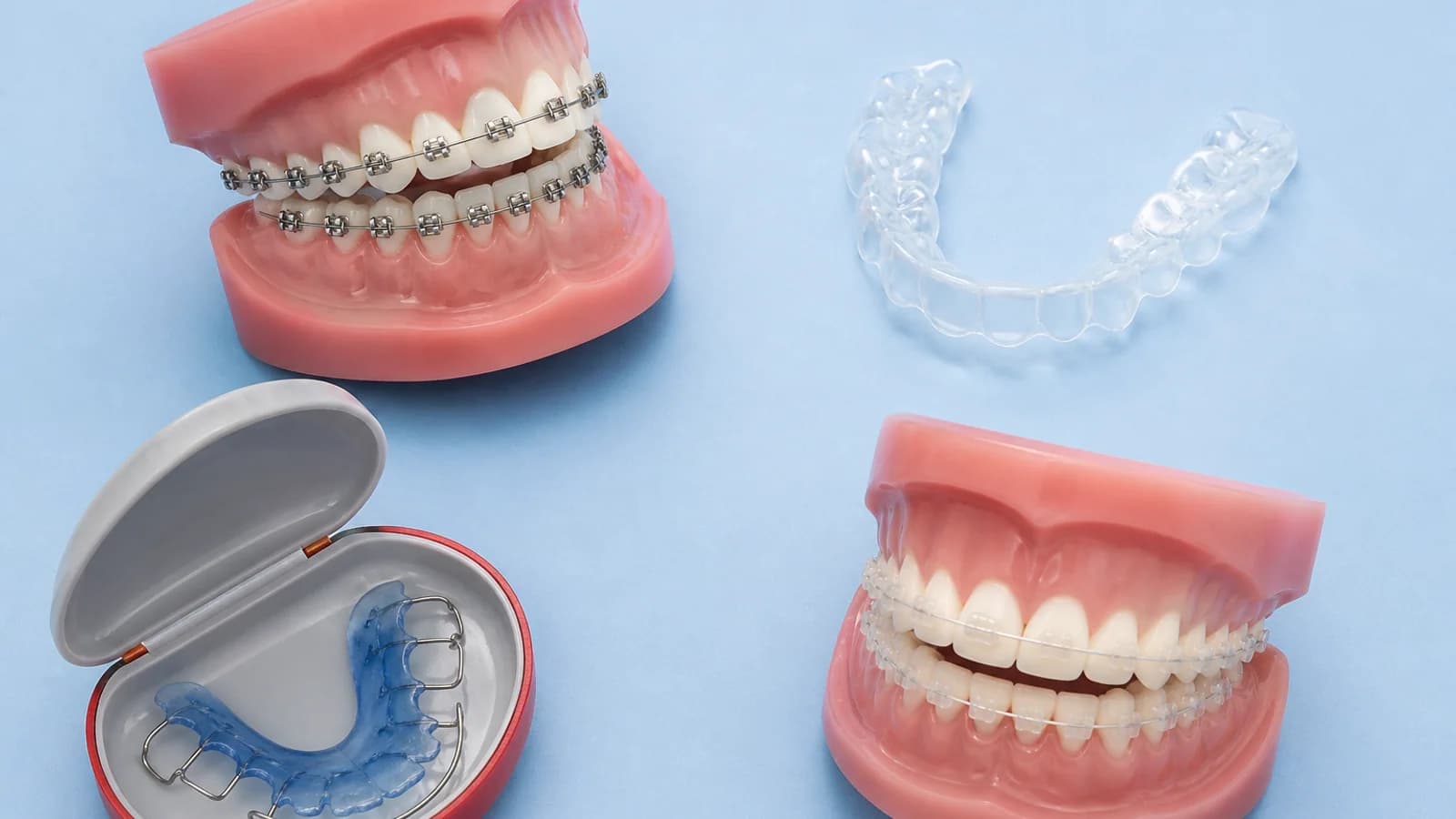
Elements cemented to the teeth as tubes and tonches; BAR_ to those which are firmly anchored the metal alloy arches, by means of ligatures. When adjusting the wires, pressure is exerted on the teeth and gradually moved to the right position. Orthodontics are adjusted monthly to achieve the desired results; these may take months or a couple of years.
Trainers
They are used to control the consequences of bad thumb suction or tongue thrust against teeth.
Spacekeepers
If a young child loses a tooth prematurely, a maintainer is used to keep the space open until the permanent tooth erupts.
Brackets
- Metals: do not use rubber links but small metal wires to hold the bow.
- Themetics: Various materials such as plastic, ceramics, sapphire or polycarbonate can be found, being the sapphire most resistant and not stained, unlike the ceramics's tones.
- Linguales: They are placed on the palatine face and lingual of the teeth, so they are not visible; even if they use metal tones. It can initially cause greater discomfort in the patient.
- Self-ligated Damon: ligature installation is not necessary to fix the arches to the tones, which provides a more comfortable and faster tooth movement, obtaining shorter treatments and with more splendour appointments in time.
Types of removable orthodontics
Interceptive
These devices have their specific indications that do not supplement to the fixed orthodosis, solve some simple badolouis. They are used primarily as temporary teething treatment (temprane or infantile); where certain states diagnosed in time can be corrected; to such an extent that permanent teething treatment is very specific or even unnecessary.
Invisible Orthodontics / Aligners / Invisaling
They are an alternative to traditional orthodox for adults, they are used in series to move teeth in the same way as fixed ones, but without metal wires or tornes. They are virtually invisible and must be removed for eating, brushing and flossing.
The main advantages of this transparent orthodontic therapeutic system are the reduction of control appointments, aesthetics, improvement in oral hygiene and greater comfort for the patient.
Removable space retainers
They perform the same function as fixed ones. They are made with an acrylic base that adapts to the bone; it has plastic branches and wire that extend between specific teeth, to maintain the space between them.
Jaw repositioning apparatus (stabilized)
They are placed on the upper and lower jaws and train the jaw to close in a more favorable position. They can be used to correct temporomandibular joint disorders (TMJ).
Lip and cheek separators
They are designed to keep the lips and cheeks separate from the teeth. The lips and muscles of the cheeks exert pressure on the teeth and these devices help to relieve it.
Palate expander
It is used to extend the upper jaw arch. When external pressure is applied by means of screws on that plate, the joint of the palate bones is forcially opened, The joint of the joint of the joint is open longitudinally open, and the joint is open. The joint is and widens the palate area.
Removable retainers
Avoid movement of teeth to original positions.
Facial arch
A strap is placed around the head and then attached to a wire in the front. The caps prevent the growth of the upper jaw; they retain the rear teeth in the position in which they are located; at the same time they pull back the anterior teeth.
How do I know if I need orthodontic treatment?
It can be determined whether orthodontic treatment is needed based on. diagnostic elements such as medical and dental history, detailed clinical examination, plaster models, X-rays and photographs.
According to the diagnosis made, your orthodontist will develop a treatment plan that is appropriate to your needs, and determines the type of orthodontic needs.
Orthodontic treatment can be done at any age, obtaining excellent results. These treatments aim to improve aesthetics, function, of course, health, as well as phonetics.
With a orthodontic treatment difficulties in maintaining proper oral hygiene; risk of caries and periodontal disease, functional abnormalities, problems with temporomandibular joint and other psychosocial problems can be corrected.
Remember that a correct orthodontic treatment should be performed by an orthodontic specialist.
Dr. Fernanda Calvo Guillén Orthodontist
Author: Torre Médica Santa Inés
Personalized care
Do you need professional guidance?
Our team can help you find the right specialty and coordinate your appointment.
Schedule via WhatsApp →